
Kerala, often referred to as “God’s Own Country,” is not only celebrated for its lush landscapes and rich cultural history but also for its diverse musical traditions. Rooted in centuries-old customs, Kerala’s music reflects the soul of the state—blending religious, classical, and folk elements to create a unique soundscape. From the rhythmic beats of percussion instruments to the melodic vocals of classical and folk tunes, the music of Kerala offers an auditory journey through its history, traditions, and vibrant communities.
The Classical Rhythms: Sopana Sangeetham and Carnatic Music
Kerala’s classical music heritage is deeply intertwined with its religious and temple traditions. Sopana Sangeetham, a traditional form of music native to Kerala, is one of the state’s most distinctive contributions to classical Indian music. It is often performed in temples, especially during rituals and poojas. Characterized by its slow, meditative tempo, Sopana Sangeetham’s name is derived from the word “sopanam,” meaning steps. This music, often sung at the foot of temple steps, uses ragas that evoke devotion and spirituality. With minimal instrumental accompaniment, Sopana Sangeetham stands out for its use of the traditional idakka and chenda drums.
In parallel, Carnatic music, one of India’s two major classical music systems, also finds a strong presence in Kerala. Pioneers like Swathi Thirunal Rama Varma, the Maharaja of Travancore, played an instrumental role in promoting Carnatic music in Kerala. He was not only a patron but also a composer who contributed many compositions that are still revered today. Carnatic music’s deep-rooted influence on Kerala’s classical tradition is evident in numerous festivals and concerts held across the state.
The Power of Percussion: Chenda Melam and Panchavadyam
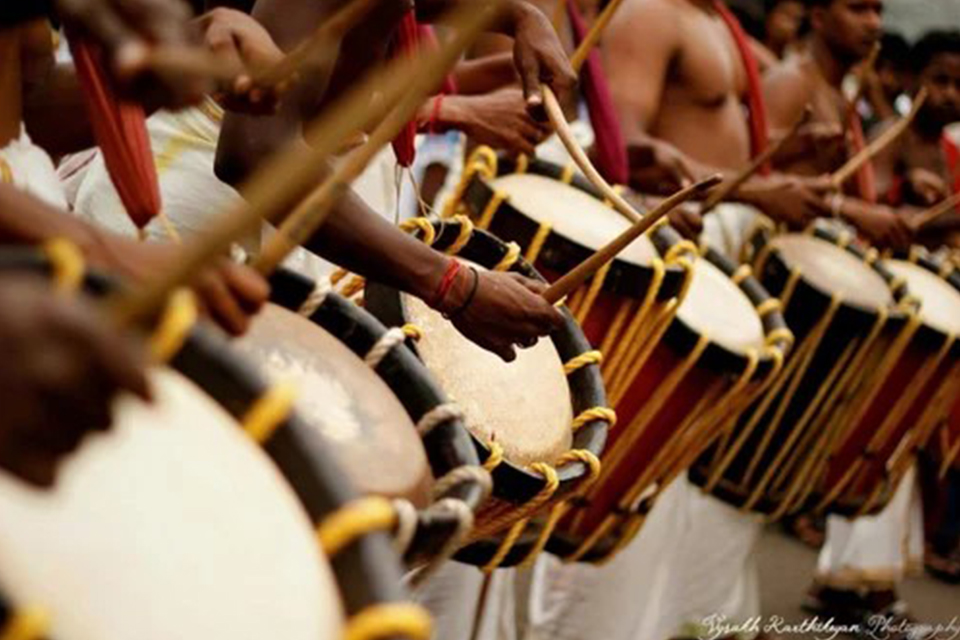
Kerala’s affinity for percussion instruments is unmatched, and the state has produced some of the most iconic and intricate rhythmic compositions. The chenda, a cylindrical drum made of wood, is an essential instrument in Kerala’s music culture. It plays a leading role in various temple festivals, most notably in Chenda Melam, a grand musical ensemble performed during festivals such as Thrissur Pooram. The synchronized beats of chenda players create an atmosphere of grandeur and celebration, with up to 200 performers often participating in a single performance.
Another remarkable percussion-based ensemble is Panchavadyam, which, as the name suggests, involves the use of five instruments—timila, madhalam, ilathalam, kombu, and edakka. Performed in temple settings, Panchavadyam is a symphony of rhythm and melody, where the instruments come together in a crescendo, culminating in a captivating auditory experience.
Folk Traditions: Pulluvan Pattu, Oppana, and Theyyam
Kerala’s folk music forms a rich tapestry of sounds that reflect the everyday lives of the people. One such tradition is Pulluvan Pattu, a form of snake worship music performed by the Pulluvan community. The songs are accompanied by simple instruments like the pulluvan veena and kutam, and are believed to invoke the blessings of serpent deities. The music is hauntingly beautiful, drawing listeners into a trance-like state.
Oppana, a popular musical form among Kerala’s Muslim community, is performed during weddings. It features rhythmic clapping and foot movements along with songs that celebrate the bride and the beauty of marriage. The songs are poetic, often humorous, and form a crucial part of Kerala’s rich tapestry of wedding traditions.
Theyyam, a spectacular form of ritualistic worship, also showcases a unique fusion of music and dance. The accompanying music, which includes drums and vocal chants, plays an integral role in heightening the visual and emotional intensity of the performance. Each rhythm and song in Theyyam performances carries religious and cultural significance, emphasizing the connection between music and spirituality in Kerala.
The Influence of Modern Times: Mappila Songs and Fusion Genres
Kerala’s musical heritage, while deeply rooted in tradition, has also evolved over time. Mappila Pattu, a genre of music developed by Kerala’s Muslim community, combines Arabic, Persian, and Malayalam influences. These songs reflect the unique cultural history of Kerala’s coast, especially the interactions with Arab traders. They are usually sung at weddings and other community events and are known for their simple, heart-touching lyrics.
With the advent of modernity, Kerala has also embraced fusion music that combines traditional elements with contemporary styles. Artists today are blending classical and folk music with modern genres like rock, jazz, and electronic music, creating new interpretations of the state’s musical identity.
Preserving the Past, Embracing the Future
Kerala’s musical heritage is a testament to its cultural diversity and artistic richness. Whether through the ancient temple rituals of Sopana Sangeetham, the heart-pounding rhythms of Chenda Melam, or the evocative melodies of folk traditions, music continues to be a vital part of Kerala’s cultural fabric.
While the influence of globalization and modern music genres is undeniable, there is a strong movement to preserve Kerala’s traditional music. Through festivals, performances, and educational initiatives, efforts are being made to pass on these age-old traditions to future generations, ensuring that Kerala’s musical legacy continues to resonate across the world.